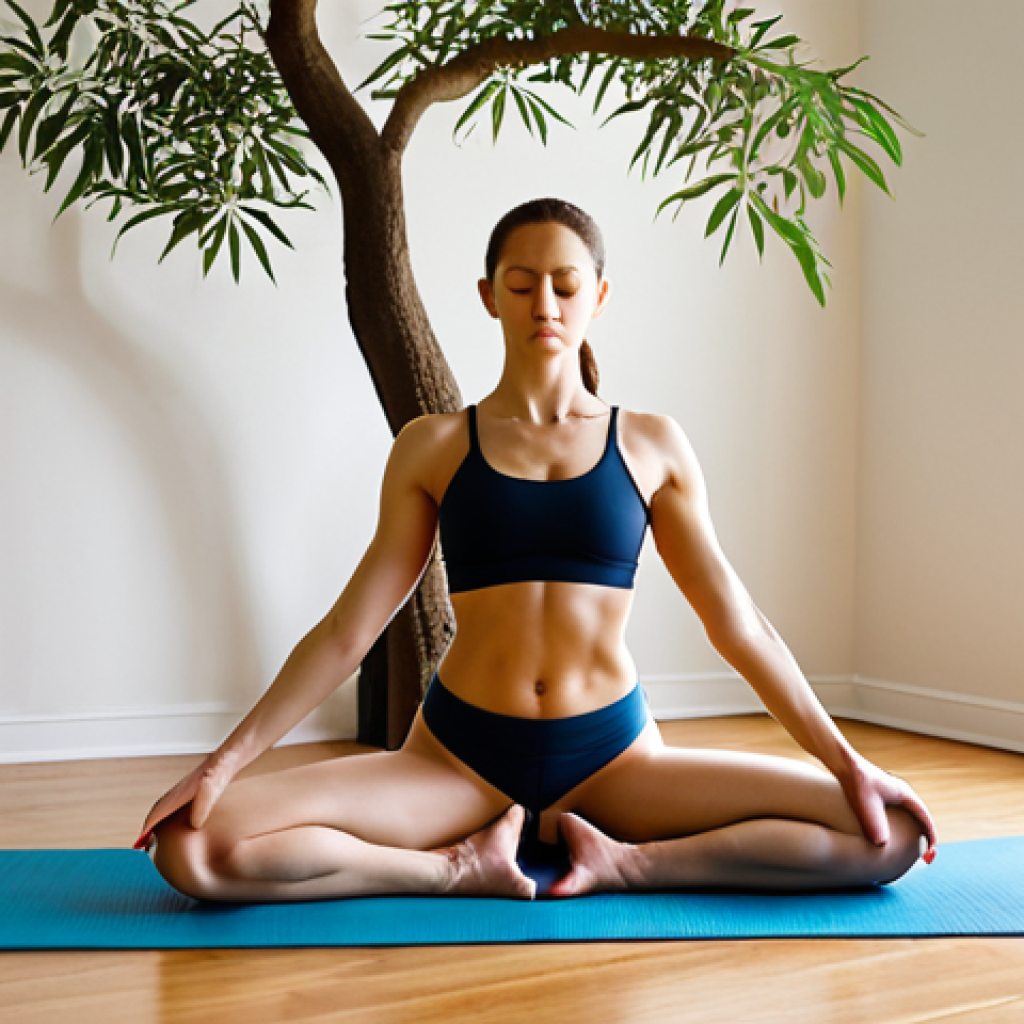
Stepping onto a yoga mat has always felt like a familiar ritual for me. That comforting, grippy surface beneath your palms and feet, grounding you through every downward dog and warrior pose – it’s the bedrock of so many yoga journeys, mine included.
But lately, especially with the boom in at-home wellness and people seeking more personalized, innovative ways to deepen their practice, there’s been a noticeable buzz around aerial yoga and those intriguing yoga swings.
I remember first seeing one, suspended effortlessly, and thinking, “Could that really be yoga?” It truly opens up a whole new dimension, quite literally, moving beyond the two-dimensional confines of the mat.
While a mat offers stability and a connection to the earth, a swing promises release, inversion, and a playful freedom that’s completely different. You might be curious how these two vastly different tools shape your practice, or even which one aligns better with your wellness goals in this evolving fitness landscape.
Let’s dive into the details below.
For years, my yoga mat was my sanctuary, a familiar rectangle of calm that never betrayed me. It was the foundation for every pose, every breath, every moment of grounding.
But then, the world of aerial yoga swung into view, quite literally, and it completely reshaped my perspective on what “yoga” could be. It wasn’t just a trend; it was an invitation to defy gravity and experience movement in a way I never thought possible within the confines of my practice.
Embracing New Dimensions: The Shift from Grounded to Suspended Practice
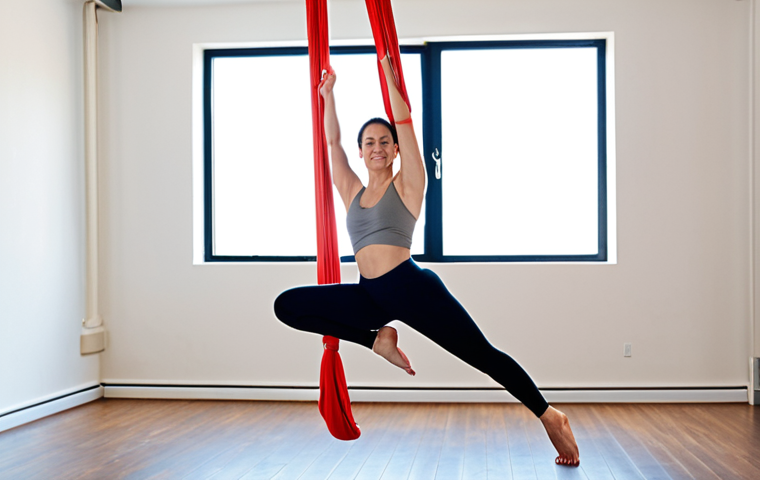
1. A Different Kind of Support: Earth vs. Air
When I first stepped onto a yoga mat, the immediate sensation was one of solid, unyielding support. It’s what teaches you stability, balance, and how to root down through your feet and hands.
The mat is about finding your center in relation to the earth, a constant reminder of gravity’s pull. I remember struggling with balancing poses like tree pose, relying entirely on my own two feet and core engagement to stay upright.
The mat offered feedback, a tangible surface to push against. It’s truly foundational. Conversely, the yoga swing immediately challenges that ingrained sense of groundedness.
The fabric wraps around you, supporting you in ways that distribute weight differently, allowing for a completely unique interaction with gravity. It felt incredibly liberating the first time I leaned back into the swing, trusting it to hold my entire body weight.
There’s a moment of surrender involved, letting go of the need for a solid surface beneath you, which for me, was a huge mental shift. It’s less about pushing *into* the earth and more about floating *with* the air, finding stability through suspension.
This subtle yet profound difference in how your body is supported changes everything about how you approach strength, flexibility, and even balance within a pose.
It truly feels like unlocking a secret level of movement.
2. The Freedom of Inversion: Breaking New Ground
One of the most captivating aspects of aerial yoga, for me, was the promise of easy, comfortable inversions. On a mat, achieving a handstand or headstand took years of dedicated practice, core strength, and a fair amount of fearlessness – I still have vivid memories of toppling over more times than I care to count!
It was a slow, sometimes frustrating, journey of building up to literally turning my world upside down. The mat was a constant, flat surface, demanding absolute precision and power to defy gravity.
With the swing, inversions became accessible almost immediately. The fabric cradles your hips and supports your spine, allowing you to hang upside down with a sense of security and ease that a mat simply cannot provide.
My first suspended inversion was a revelation; the decompression in my spine was instant and profound, a sensation I’d only ever dreamed of achieving with such comfort.
It felt less like a struggle and more like a gentle, elongating stretch. This accessibility to inversions, regardless of your strength level, is a game-changer, opening up a host of physiological benefits like improved circulation and spinal decompression without the usual strain or fear.
It’s a truly freeing experience that a mat, by its very nature, can’t replicate.
Physical Reimagination: Unlocking Deeper Stretches and Core Strength
1. Targeting Muscles Differently: A Nuanced Approach to Strength
When I’m on my mat, every vinyasa flow or holding pose requires me to actively engage specific muscle groups to maintain form and stability. Think about a Warrior II – you’re grounding through your feet, activating your quads, engaging your core, and extending through your fingertips.
It’s a fantastic full-body workout that builds strength and endurance through direct resistance against gravity. I’ve built immense foundational strength this way, and it’s a non-negotiable part of my weekly routine.
The mat provides the perfect friction for movements, and you really feel the burn as you hold positions. However, the swing introduces an element of instability and support that changes how muscles are recruited.
Because the swing can support some of your body weight, it allows you to access deeper stretches that might be impossible on the mat. For example, in a split pose using the swing, the fabric gently supports one leg, enabling a much fuller and less strained stretch in the hamstrings and hip flexors.
But don’t be fooled, it also activates different core muscles in surprising ways to stabilize yourself in the air. I’ve found that movements I thought were easy became incredibly challenging when I tried to stabilize in the swing, leading to new muscle activation and a truly unique kind of strength building.
It’s less about raw pushing power and more about refined, synergistic muscle engagement.
2. The Art of Spinal Decompression and Joint Health
One of the most immediate and profound benefits I experienced with aerial yoga was the incredible spinal decompression. After years of sitting at a desk and practicing traditional yoga, I often felt a lingering compression in my lower back.
On the mat, while poses like cat-cow or child’s pose offer some relief, they don’t actively create space between the vertebrae in the same way. The mat, being flat, provides no direct way to counteract gravity’s downward pull on the spine when you’re upright.
With the swing, the ability to hang freely, even for just a few minutes, allows gravity to work *for* you, gently lengthening the spine and creating space between the discs.
I distinctly remember the first time I hung in a full inversion; I felt a gentle lengthening from my tailbone all the way up to my neck, like my spine was finally breathing.
It’s an almost therapeutic sensation that truly eases back pain and improves overall spinal health. This same principle applies to other joints; the swing can relieve pressure on wrists and knees during poses that would typically bear weight on the mat, offering a gentler, more accessible option for those with joint sensitivities or injuries.
It truly feels like giving your body a much-needed stretch and reset from the inside out.
The Mental Landscape: Cultivating Mindfulness and Freedom in Motion
1. Finding Focus Amidst Novelty: A New Path to Presence
On the yoga mat, my practice often feels like a return to a familiar comfort zone. The sequence of poses, the feel of the mat beneath me – it all contributes to a sense of calm and predictability that allows me to settle into a meditative state.
I’ve found my deepest moments of mindfulness on the mat, where the repetitive movements and steady breath anchor me firmly in the present moment. It’s a space where distractions often fade away as I focus inward on my body and breath.
However, stepping into the swing introduces an entirely new set of sensations and challenges that demand a different kind of presence. The novelty of being suspended, the slight sway, the need to adjust to an unfamiliar support system – all of this forces an immediate and intense focus.
There’s less room for the mind to wander when you’re suspended mid-air! I found myself more acutely aware of every micro-adjustment, every shift in weight, and every breath to maintain balance.
This intense focus, born out of novelty, paradoxically led to a heightened state of mindfulness for me. It wasn’t the calm, settling mindfulness of the mat, but an exhilarating, active presence that felt incredibly invigorating.
It’s a powerful way to shake up your routine and reignite your focus.
2. The Playful Side of Practice: Joy and Exploration
My mat practice, while deeply rewarding, can sometimes feel serious. There’s a discipline to it, a focus on alignment and effort that, while crucial, doesn’t always invite spontaneous joy.
It’s about perfecting form and building inner strength, which is incredibly valuable but sometimes less about playful exploration. The yoga swing, on the other hand, instantly brought out a sense of childlike wonder and play in my practice.
The ability to spin, sway, flip, and hang upside down without fear felt incredibly liberating and, frankly, just plain fun. It tapped into a part of me that craved movement and exploration without strict rules.
I found myself laughing during sessions, trying new things, and just enjoying the sheer novelty of it all. This playfulness didn’t detract from the physical benefits; if anything, it made me *want* to practice more, fostering a deeper, more joyful connection to my body and movement.
It’s a refreshing reminder that yoga can be both profound and incredibly enjoyable, breaking away from any perceived rigidity.
Practical Considerations: Space, Setup, and Investment
1. The Footprint: How Much Room Do You Really Need?
For anyone considering a home practice, the practicalities of space are usually top of mind. A yoga mat is, by far, the most space-efficient option. You roll it out, practice, and then roll it up and tuck it away.
It requires minimal clear floor space, usually just enough for you to extend your limbs in all directions, and it’s completely portable. I’ve taken my mat everywhere, from small apartments to hotel rooms, making it incredibly versatile for maintaining a consistent practice on the go.
Its simplicity is its greatest strength in terms of practical use and spatial requirements. A yoga swing, however, demands a significantly larger dedicated space.
You need not only floor space but also sufficient height and clearance around the swing to perform movements safely without hitting walls or furniture.
Installing it requires a sturdy anchor point in the ceiling or a specialized frame, and it’s not something you can easily set up and take down for every session.
I had to carefully measure my ceiling height and ensure there was ample clear space around where I planned to hang it. While the setup is an initial investment of time and effort, the reward for me was a dedicated aerial studio within my home.
It transforms a room into a dynamic movement space, but it’s a commitment in terms of real estate.
2. Initial Investment and Long-Term Value
The barrier to entry for mat yoga is incredibly low. A good quality yoga mat can be purchased for a very reasonable price, making it accessible to virtually anyone interested in starting a practice.
Beyond the mat itself, you might consider props like blocks or straps, but these are optional and also very affordable. The ongoing costs are minimal, perhaps just for classes or online subscriptions.
This low initial investment is one of the reasons mat yoga remains so universally popular; it’s easy to start and maintain without breaking the bank. For a yoga swing setup, the initial investment is considerably higher.
The swing itself is an investment, and then you need to factor in the cost of professional installation of a secure ceiling mount or the purchase of a freestanding aerial rig.
These can range from a few hundred to over a thousand dollars, depending on the quality and complexity. While it’s a larger upfront cost, I’ve personally found the long-term value to be immense.
The ability to access advanced inversions, unique stretches, and a playful element to my practice from the comfort of my home made it a worthwhile expenditure.
It’s about weighing the initial outlay against the unique benefits and how deeply you want to explore this alternative practice.
| Feature | Traditional Yoga Mat | Aerial Yoga Swing |
|---|---|---|
| Primary Support | Grounded, Earth-bound | Suspended, Air-supported |
| Spinal Decompression | Indirect, through specific poses | Direct, through inversion and hanging |
| Inversion Accessibility | Requires significant strength & practice | Easier for all levels, supported |
| Space Required | Minimal (roll out, roll up) | Significant (height & clearance) |
| Portability | Highly portable | Fixed installation, not portable |
| Core Engagement | Ground-based stabilization | Suspended stabilization, nuanced |
| Cost (Initial) | Low (mat, optional props) | Higher (swing, installation/rig) |
| Learning Curve | Gradual progression | Can feel quicker for some inversions, but unique challenges |
Evolving Your Practice: Beyond the Mat’s Edge
1. Complementary Practices, Not Substitutes
When I first delved into aerial yoga, I wondered if it would replace my traditional mat practice entirely. What I’ve discovered, however, is that these two forms of yoga are beautifully complementary rather than mutually exclusive.
My mat practice continues to build my foundational strength, my connection to the ground, and my understanding of precise alignment without external support.
It’s where I return to basics, refine my breathwork, and cultivate that deep, internal stillness. I think of it as my stable anchor, always there to recenter me.
The swing, conversely, has become my playground for exploration and expansion. It allows me to decompress, access advanced poses that would otherwise be out of reach, and inject a sense of joyous, uninhibited movement into my routine.
It highlights different muscle groups and challenges my balance in entirely new ways. I’ve found that the strength and flexibility I gain from aerial work actually *enhances* my mat practice, making certain poses feel more accessible or allowing me to hold them with greater ease.
Rather than choosing one over the other, I’ve found immense value in integrating both, allowing each to enrich the other and create a truly holistic yoga journey that caters to all aspects of my physical and mental well-being.
It’s like having two incredible tools in my wellness toolkit.
2. The Future of Movement: Innovation in Wellness
It’s clear that the landscape of wellness and fitness is constantly evolving, with new modalities emerging that push the boundaries of traditional practices.
My journey from the familiar mat to the exhilarating swing is a testament to this ongoing innovation. People are increasingly seeking personalized, engaging, and effective ways to stay healthy, and this often means looking beyond the conventional.
The rise of aerial yoga, along with other alternative movement forms, reflects a desire for more diverse experiences that cater to different needs, body types, and preferences.
For me, embracing the yoga swing wasn’t just about trying something new; it was about acknowledging that my body and mind can benefit from varied stimuli.
It’s about recognizing that “yoga” isn’t a static concept but a dynamic practice that can adapt and grow. I truly believe that the future of personal wellness lies in this kind of open-minded exploration, where we’re encouraged to experiment and find what truly resonates with our individual goals.
Whether it’s the grounding stability of the mat or the liberating freedom of the swing, the most important thing is to keep moving, keep exploring, and keep finding joy in the process.
It’s an exciting time to be part of the wellness community, with so many options available to deepen our connection to ourselves.
Conclusion
My journey from the grounded stillness of a yoga mat to the exhilarating freedom of an aerial swing has truly redefined my understanding of yoga. It’s not about choosing one over the other, but rather embracing the rich tapestry of movement that both offer.
Each practice brings unique benefits, strengthening different aspects of my body and mind, and together, they form a more complete and joyful wellness routine.
I’ve learned that the true essence of yoga lies in exploration and finding what truly resonates with your unique path.
Useful Information
1. Seek Professional Installation: If you’re setting up an aerial swing at home, prioritize safety. Always consult a professional to ensure your ceiling mount is securely installed and can support your weight with ample clearance.
2. Start with Beginner Classes: Even if you’re an experienced mat yogi, aerial yoga has a different learning curve. Begin with beginner-specific aerial classes to learn proper techniques and safety protocols from certified instructors.
3. Assess Your Space: Before investing in an aerial swing, carefully measure your available space. You need not just height, but also significant clear space around the swing for safe movement.
4. Listen to Your Body: Both mat and aerial yoga offer profound benefits, but always pay attention to your body’s signals. Modify poses as needed, and don’t push beyond your comfort level, especially when trying new movements.
5. Explore Local Studios: Many yoga studios now offer both traditional mat classes and aerial yoga. Try a few introductory sessions at local studios to experience both before committing to a home setup or a specific style.
Key Takeaways
While the traditional yoga mat offers foundational strength, grounded stability, and portable practice, the aerial yoga swing provides unparalleled spinal decompression, easier access to inversions, and a playful, liberating approach to movement.
The mat builds strength through direct resistance, whereas the swing focuses on suspended stabilization and deeper stretches. Practically, mats require minimal space and investment, while swings demand significant dedicated space and a higher initial cost for setup.
Ultimately, both are complementary tools that can enrich your yoga journey, allowing for a more diverse and holistic practice.
Frequently Asked Questions (FAQ) 📖
Q: I’m intrigued by aerial yoga swings, but they look a bit intimidating! Is it really for everyone, especially if I’m new to yoga or not super strong?
A: Oh, I totally get that initial “whoa” moment when you see someone effortlessly floating in a swing! It looks like something out of a Cirque du Soleil show, right?
But honestly, you’d be surprised. Aerial yoga, while appearing challenging, can actually be incredibly supportive, even for beginners or those who feel they aren’t “strong enough.” The swing itself acts like a prop, taking some of the weight off your joints, particularly your spine, which can make inversions, for example, far more accessible than trying them on a mat.
I’ve seen people who struggle with a basic Downward Dog on the mat find immense relief and extension in their spine in a supported hanging pose. It’s less about performing acrobatics and more about decompressing, lengthening, and finding subtle core engagement you might not even notice you’re building.
So yes, it absolutely can be for everyone; it’s just about finding an instructor who knows how to guide you safely through modifications. Don’t let the initial visual scare you off – the feeling of liberation is truly something else!
Q: Beyond the obvious, how does practicing on a mat versus a swing truly feel different, and what unique benefits do they each offer for deepening a practice?
A: That’s a fantastic question, because it really gets to the heart of the experience! On the mat, the feeling is all about groundedness. You’re constantly pushing into the earth, finding stability, and using gravity to create resistance for building strength.
It’s a very internal, often meditative process, where every micro-adjustment connects you to your foundation. You feel the grit of your muscles working, the stretch as you root down.
My personal take is that the mat is where you build your deep, foundational understanding of alignment and body awareness – it’s your anchor. The swing, however, is a complete paradigm shift.
It’s like comparing a solid, comforting hug to a joyful, weightless dance. The immediate sensation is one of release and expansion. When you’re suspended, gravity works with you in a new way, allowing for incredible spinal decompression and an almost effortless deepening into stretches you might struggle with on the mat.
There’s a playful freedom to it that encourages exploration; I remember the first time I fully inverted in a swing, the blood rushing to my head, and just feeling this incredible rush of clarity and lightness – it shifts your perspective, quite literally!
While the mat cultivates stability and patient strength, the swing invites a sense of liberation, trust, and even a bit of childlike wonder, revealing new dimensions of your flexibility and core strength you didn’t know you had.
Q: With so many options out there, how would I even begin to decide which tool – the trusty mat or the adventurous swing – is right for my current wellness journey, especially if I’m looking to invest in home practice?
A: Honestly, it boils down to what your body and mind are craving right now, and what your goals are. If you’re just starting out with yoga, or if your primary goal is to build fundamental strength, improve alignment, and cultivate a consistent, meditative practice, the mat is your absolute best friend.
It’s low-cost, portable, and allows you to focus on the basics without too many external variables. Think of it as building a robust foundation for your entire yoga house.
Now, if you’ve got some yoga experience under your belt, or if you’re specifically seeking spinal decompression, want to explore inversions without compression, or simply crave a more playful, expansive, and perhaps even de-stressing experience, then the swing could be an incredible addition.
For home practice, you’ll need to consider space – do you have a secure, load-bearing beam or a sturdy doorway frame to hang it from? And while the initial setup cost is higher than just a mat, it can be a fantastic investment for targeted benefits.
My advice? Don’t feel pressured to pick just one. If possible, try a few aerial yoga classes at a local studio before committing to a home setup.
You might discover, as I did, that they both offer unique and complementary pathways to a richer, more diverse wellness journey. Sometimes you need the grounding, sometimes you need to fly!
📚 References
Wikipedia Encyclopedia
구글 검색 결과
구글 검색 결과
구글 검색 결과
구글 검색 결과
구글 검색 결과