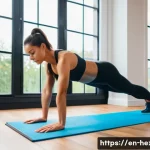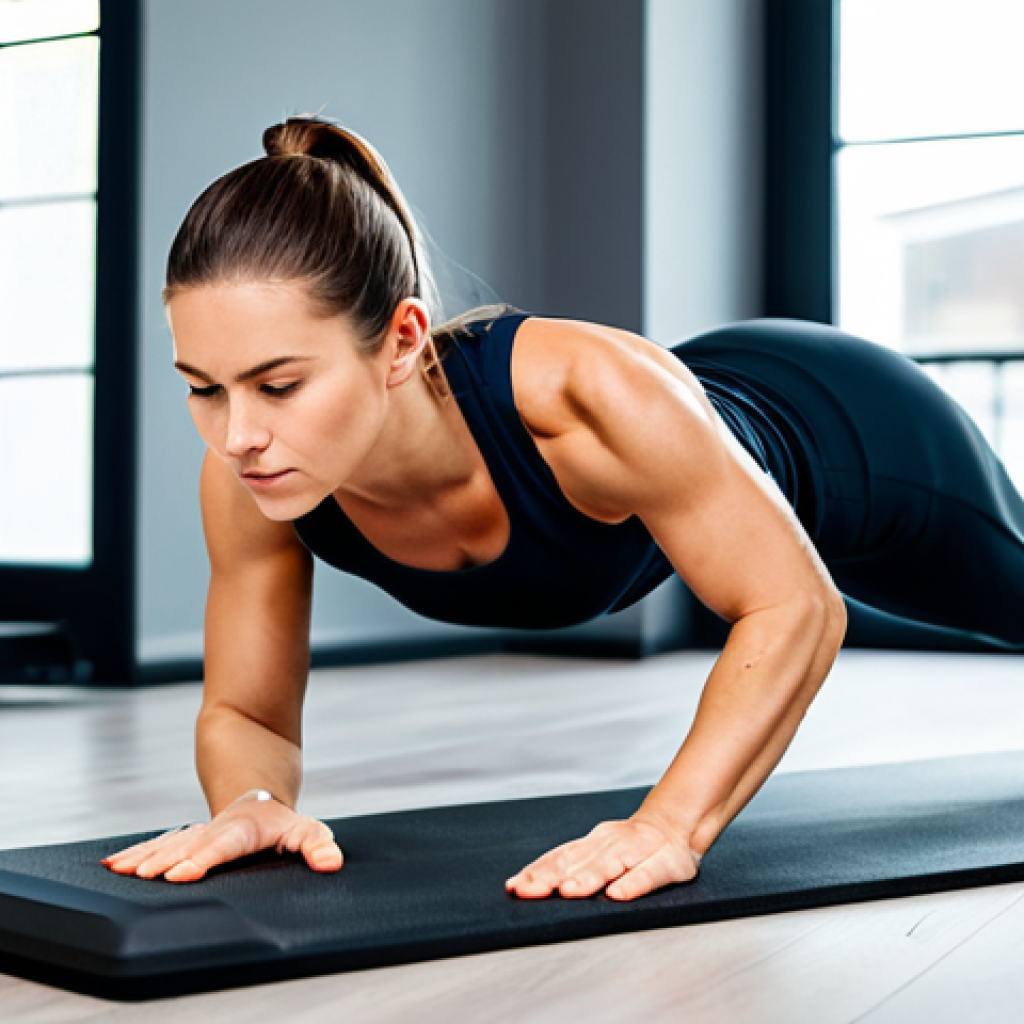
That nagging feeling of a weak core? We’ve all been there, grimacing through endless planks, only to feel our lower back protesting or our wrists screaming for mercy.
I vividly remember hitting a wall with my regular planks; the sheer monotony made me want to skip it entirely, and my form often deteriorated into a shaky mess.
It was incredibly frustrating, feeling like I was putting in the work but seeing minimal real progress. Then, I started exploring the world of plank tools, and honestly, it was a game-changer.
With the massive shift towards intelligent home fitness and personalized training we’ve seen recently, it’s no surprise that simple core exercises are getting a much-needed upgrade.
From innovative ab wheels that demand more controlled movement to ergonomic balance trainers that challenge stability in entirely new ways, these aren’t just gimmicks.
They’re designed to tackle common issues like poor form, alleviate joint strain, and inject some much-needed novelty into your routine, preventing that all-too-familiar plateau.
Some even integrate with smart apps, hinting at a future where AI-powered feedback ensures every single rep is perfect. Trust me, finding the right tool can transform that dread into genuine engagement, making you actually *want* to strengthen your core.
Let’s explore exactly how these tools can revolutionize your core workout.
That nagging feeling of a weak core? We’ve all been there, grimacing through endless planks, only to feel our lower back protesting or our wrists screaming for mercy.
I vividly remember hitting a wall with my regular planks; the sheer monotony made me want to skip it entirely, and my form often deteriorated into a shaky mess.
It was incredibly frustrating, feeling like I was putting in the work but seeing minimal real progress. Then, I started exploring the world of plank tools, and honestly, it was a game-changer.
With the massive shift towards intelligent home fitness and personalized training we’ve seen recently, it’s no surprise that simple core exercises are getting a much-needed upgrade.
From innovative ab wheels that demand more controlled movement to ergonomic balance trainers that challenge stability in entirely new ways, these aren’t just gimmicks.
They’re designed to tackle common issues like poor form, alleviate joint strain, and inject some much-needed novelty into your routine, preventing that all-too-familiar plateau.
Some even integrate with smart apps, hinting at a future where AI-powered feedback ensures every single rep is perfect. Trust me, finding the right tool can transform that dread into genuine engagement, making you actually *want* to strengthen your core.
Let’s explore exactly how these tools can revolutionize your core workout.
Elevating Your Core Engagement Beyond Static Holds
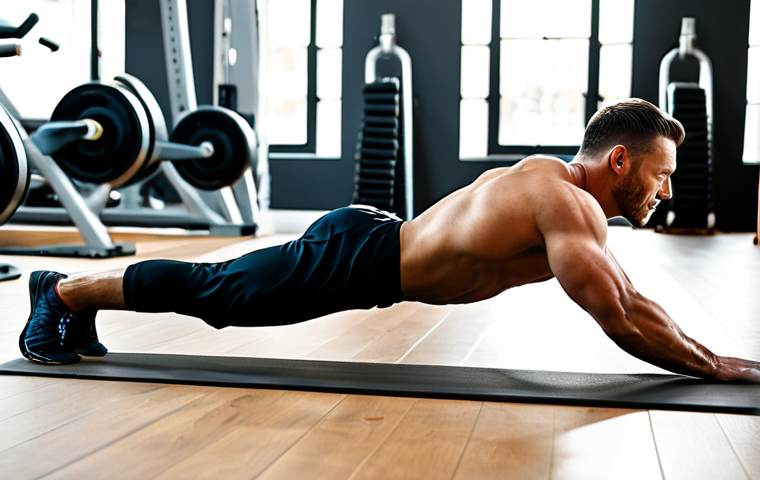
Planking, in its purest form, relies on isometric contraction, which is fantastic for building endurance. However, after a certain point, the gains can feel minimal, and the sheer lack of movement can lead to boredom and a mental block.
I found myself clocking longer times but not necessarily feeling a deeper engagement in my obliques or lower abs. This is where specialized tools step in, transforming a static hold into a dynamic challenge that forces your core to work harder and smarter.
They introduce elements of instability and controlled movement that activate more muscle fibers, helping you push past plateaus that seemed insurmountable with just bodyweight.
It’s like turning a simple balance beam into a full obstacle course; suddenly, every fiber of your core is awake and responding.
1. Dynamic Stability for Deeper Activation
Traditional planks often allow us to ‘cheat’ by relying on skeletal structure rather than pure muscle engagement, especially as fatigue sets in. Tools like stability balls or even simple slider discs under your feet dramatically increase the instability.
My first time trying a plank with my feet on a stability ball was an absolute revelation; my entire body trembled, not from weakness, but from the incredible amount of micro-adjustments my core was forced to make to maintain balance.
This constant, subtle movement is what truly fires up the deep core muscles, including the transverse abdominis, which are often neglected in basic plank variations.
It’s an intense, but incredibly rewarding, way to ensure every muscle is truly working.
2. Redefining Core Training with Controlled Motion
While the plank is isometric, many tools introduce a controlled range of motion that targets muscles in a way static holds cannot. Ab wheels, for instance, aren’t just for rolling out; when used in a plank position, they challenge your ability to maintain a flat back while extending and retracting, demanding immense eccentric and concentric strength from your entire anterior core.
I remember how much my lats and serratus anterior also burned, showing me just how much more comprehensive these movements are. This dynamic aspect not only strengthens but also builds functional core strength that translates into better performance in everyday life and other athletic pursuits.
Preventing Injury and Perfecting Form with Smart Assistance
One of the biggest frustrations I faced with planks was the constant worry about my lower back. I’d often feel a slight twinge, a nagging discomfort that made me question if I was doing more harm than good.
It turns out, even a slight dip in the hips or rounding of the shoulders can place undue stress on vulnerable areas. This isn’t just about building strength; it’s about building *smart* strength.
Many of these modern plank tools are designed with ergonomic considerations and feedback mechanisms to guide you into optimal alignment, essentially becoming your personal form coach.
1. Ergonomic Support for Joint Protection
Tools with padded handles, angled grips, or even simple forearm rests can alleviate pressure from wrists and elbows, allowing you to focus purely on core engagement.
I used to dread planks because of my wrist pain, but once I switched to an ab mat that elevated my forearms slightly, or even used an ab wheel with ergonomic grips, it was a game changer.
It allowed me to hold the position longer and truly feel the work in my abs, not my joints. This kind of thoughtful design ensures that your core is the prime mover, rather than your body compensating with strain on smaller, more delicate joints.
2. Real-Time Feedback for Flawless Execution
Some advanced plank trainers now incorporate sensors and connect to apps, providing real-time feedback on your body position, stability, and even muscle activation.
Imagine having an app tell you, “hips dropping slightly, engage your glutes!” or “neutral spine maintained, excellent!” This kind of immediate, objective feedback is invaluable.
It eliminates guesswork and helps you internalize proper form much faster than relying solely on a mirror or the occasional check-in from a personal trainer.
For someone like me, who often works out solo, this is like having a constant, expert eye on my technique, ensuring every rep is perfectly optimized for results and safety.
Infusing Novelty and Sustaining Motivation
Let’s be honest: consistency is key in fitness, but boredom is the arch-nemesis of consistency. Staring at the floor for what feels like an eternity during a plank can quickly sap your motivation.
After a few weeks of the same old routine, I found myself skipping core days or just rushing through them with half-hearted effort. The beauty of incorporating plank tools is how they instantly inject variety and a fresh challenge, transforming a mundane exercise into an engaging and even fun part of your workout.
1. Breaking the Monotony with New Challenges
The sheer variety of plank tools means there’s always a new way to challenge your core. From sliding planks on gliders to balancing on a Bosu ball, each tool introduces a unique demand, forcing your muscles to adapt and preventing plateaus.
I remember the thrill of finally mastering a full-range ab wheel rollout; it felt like achieving a mini-milestone, and that sense of accomplishment was incredibly motivating.
It keeps your mind engaged, not just your body, making you look forward to your core workout rather than dreading it.
2. Gamification and Progress Tracking
Many smart plank tools now come with app integration that can gamify your workouts, track your progress, and even offer guided routines. Competing against your previous best, earning “badges” for consistency, or following a structured program designed for specific goals can make a world of difference.
It transforms a solitary exercise into a structured journey with clear objectives. This isn’t just about showing up; it’s about seeing tangible improvements over time, which fuels the desire to keep pushing boundaries.
Identifying the Perfect Plank Tool for Your Journey
With so many innovative tools flooding the market, choosing the right one can feel overwhelming. It’s not about finding the “best” tool universally, but the best tool *for you* and your specific fitness goals, current ability, and even your budget.
I’ve personally tried a range of them, from budget-friendly sliders to more advanced smart devices, and what worked for my friend might not work for me.
It’s about understanding what each tool offers and how it aligns with what you need to take your core strength to the next level.
| Tool Type | Primary Benefit | Best For | Considerations |
|---|---|---|---|
| Ab Wheel | Dynamic Core Strength, Anti-Extension | Intermediate to Advanced users, building strong anterior core | Requires good baseline core strength; can be hard on wrists without proper form/support. |
| Gliding Discs (Sliders) | Controlled Movement, Full Body Engagement | All levels, adding variety to planks (pike, mountain climbers) | Requires smooth surface (carpet/hardwood specific); can be tricky initially. |
| Stability Ball | Instability Training, Deep Core Activation | All levels, improving balance and proprioception | Takes up space; can roll away if not controlled. |
| Forearm Plank Trainers | Wrist/Elbow Relief, Enhanced Stability | Beginners, those with joint pain, focusing solely on core | Less dynamic range; primarily for improving static holds. |
| Smart Plank Devices | Real-time Feedback, Progress Tracking | All levels, tech-savvy users, those needing form correction | Higher cost; relies on app connectivity. |
1. Matching Tools to Your Current Fitness Level
If you’re a beginner struggling with basic planks, an ergonomic forearm plank trainer or even just a set of gliding discs might be your ideal starting point.
They provide support or allow for controlled, scaled movements that build foundational strength without overwhelming you. For someone like me, who has been planking for a while, an ab wheel or a stability ball offers that next level of challenge, forcing new adaptations.
Don’t jump straight to the most complex tool; build your foundation and progress intelligently.
2. Considering Space and Budget
While some tools are compact and budget-friendly (gliding discs, basic ab wheels), others like large stability balls or smart plank devices can be a more significant investment in terms of both cost and storage space.
Before making a purchase, take a moment to assess your home gym setup and how much you’re willing to spend. A simple, effective tool that you’ll use consistently is always better than an expensive, complex one that ends up gathering dust in a corner.
My gliders, for instance, were a cheap purchase that delivered incredible results for years.
Seamlessly Integrating Tools into Your Current Routine
Adding new equipment can sometimes feel daunting, like you need to completely overhaul your workout schedule. But the beauty of plank tools is their versatility.
They’re not designed to replace your existing routine but to enhance it, offering variations that target muscles differently or allow you to push past previous limitations.
I’ve found that even dedicating just 5-10 minutes a few times a week to these tools can yield incredible results, making my entire core feel stronger and more resilient for every other exercise I do.
1. Swapping Out or Supplementing Your Core Day
Instead of your usual static plank holds, try a few sets of ab wheel rollouts or sliding pike planks. Alternatively, you can keep your traditional plank but add a few sets with a stability ball or a plank trainer at the end to really fatigue those deep core muscles.
For me, Tuesday became “Dynamic Core Day” where I’d pick one or two tools and just go for it, focusing on quality over quantity. This simple shift prevented staleness and kept my core feeling challenged in fresh ways.
2. Progressive Overload Beyond Time
One of the limitations of traditional planks is that “progress” often just means holding longer. With tools, you can progress by increasing range of motion, adding instability, slowing down the movement, or even combining tools.
This allows for a more varied and stimulating form of progressive overload. Instead of just trying to hold a plank for another 10 seconds, I started focusing on doing 10 *perfect* ab wheel rollouts, or holding a plank with my feet on a stability ball for 30 seconds with perfect form.
It shifts the focus from mere duration to quality of movement and muscle engagement.
The Future of Core Training: Smart Tools and Personalized Progress
The fitness world is constantly evolving, and core training is no exception. We’re moving beyond just counting reps and seconds, heading towards an era where technology plays a significant role in guiding our movements, preventing injury, and providing truly personalized insights.
I’ve seen some incredible advancements already, and it excites me to think about where we’ll be in just a few years. It’s no longer just about having the tool; it’s about the intelligent feedback and adaptive training it provides.
1. AI-Driven Form Correction and Data Insights
Imagine a plank tool that not only senses your form but uses AI to analyze it against optimal biomechanics, offering specific, actionable advice in real-time.
“Engage your glutes more,” “slightly higher hips,” “activate your lats.” This level of precision, previously only available with an expensive personal trainer, is becoming more accessible.
Furthermore, these tools can track your progress over weeks and months, identifying trends, highlighting weaknesses, and suggesting personalized routines.
It’s about truly understanding your body’s response to training.
2. Immersive and Gamified Workout Experiences
Beyond just feedback, the future promises more immersive experiences. Virtual reality or augmented reality integrations could make your plank workout feel less like exercise and more like a game or a guided meditation.
Picture yourself planking on a virtual mountain peak, or holding a pose while an instructor’s avatar guides you through every micro-adjustment. This blend of fitness and entertainment will not only keep us motivated but will also make consistent, challenging core work an integral, enjoyable part of our daily lives.
The dread of a plank will be a distant memory, replaced by anticipation and engagement.
Wrapping Up Your Core Journey
As I reflect on my own journey, it’s clear that the right plank tool isn’t just an accessory; it’s a catalyst for transformation. It’s about moving beyond endless, often painful, static holds and truly engaging your core with purpose and precision. These innovations aren’t just here to make your workouts easier; they’re here to make them smarter, safer, and infinitely more motivating. If you’ve been stuck in a core rut, feeling that familiar ache or simply bored out of your mind, I genuinely urge you to explore the world of plank tools. You might just discover that strengthening your core can be an incredibly rewarding and even enjoyable part of your fitness routine.
Useful Tips for Your Core Workout
1. Start with proper form: Regardless of the tool, prioritize correct technique over duration or reps. A few perfect reps are always better than many compromised ones.
2. Listen to your body: If you feel pain, especially in your lower back or joints, stop and reassess your form or consider a more supportive tool. Your body gives the best feedback.
3. Incorporate variety: Don’t stick to just one tool. Mixing and matching different plank tools and variations will challenge your core muscles in diverse ways, preventing plateaus.
4. Warm up and cool down: Always prepare your body with a light warm-up before core work and stretch afterwards to maintain flexibility and aid recovery.
5. Consistency is key: Aim for regular core workouts throughout the week, even if they’re short. Building a strong core is a marathon, not a sprint, and consistency yields lasting results.
Key Takeaways
Plank tools transform static core training into a dynamic, engaging experience, enhancing muscle activation and preventing boredom. They are instrumental in perfecting form and reducing injury risk through ergonomic design and real-time feedback. By introducing novelty and structured progression, these tools boost motivation and help you achieve consistent, measurable results. From basic sliders to advanced smart devices, there’s a perfect plank tool to elevate anyone’s core strength journey, proving that the future of fitness is intelligent, personalized, and incredibly effective.
Frequently Asked Questions (FAQ) 📖
Q: I’m a bit skeptical; can these plank tools really make a difference with my form or joint pain, or are they just another fitness fad?
A: Oh, I totally get that skepticism! Trust me, I’ve been there, burned by countless fitness fads that promised the moon and delivered, well, a bruised ego.
But what I’ve genuinely experienced with these plank tools is a fundamental shift in how my body engages. It’s not just about a gimmick; it’s about biofeedback.
When you’re on an ab wheel, for instance, your core has to work harder to stabilize you through that rolling motion – there’s no way to cheat by sagging your hips or putting all the pressure on your lower back.
Similarly, a balance trainer forces those smaller, stabilizing muscles to fire up in ways a flat floor never could. For me, that meant my aching wrists, which always protested during regular planks, suddenly felt less stressed because my shoulders and core were doing their proper job.
It’s like these tools inherently guide you into better form, almost without you realizing it, making the movement more efficient and less likely to cause strain.
It was a revelation for my lower back, too; I could finally feel my abs working, not just my spine protesting.
Q: With so many different plank tools out there – ab wheels, balance trainers, smart mats – how do I even begin to choose the right one for me and my specific needs?
A: That’s a fantastic question, and honestly, it can feel a bit overwhelming walking into a sporting goods store or browsing online with all the options.
My advice, from someone who’s tried a few duds and found some gems, is to start by honestly assessing your current biggest pain point or goal. Are your wrists screaming?
An ab wheel might be amazing because it distributes weight differently and forces a more dynamic engagement. Is it pure boredom or a lack of challenge that’s holding you back?
Then a balance trainer or even one of those new smart mats that offer interactive routines could be your best bet for injecting some real fun and variety.
Don’t feel pressured to buy the most expensive, high-tech gadget right off the bat. Sometimes, a well-designed, sturdy ab wheel for twenty or thirty bucks can be a total game-changer.
I personally started with a basic ab wheel, and once I felt a solid improvement, I ventured into balance trainers. It’s a journey, and what works wonders for one person might just be ‘meh’ for another.
Think about what will genuinely motivate you to show up for your core work.
Q: I tend to get bored really quickly with exercise, especially repetitive stuff like planks. How do these tools actually help me stay motivated and prevent that dreaded workout plateau I always seem to hit?
A: Oh, you’re speaking my language! Monotony is the silent killer of consistency, isn’t it? I swear, just the thought of another static plank used to fill me with dread.
What these tools really bring to the table, beyond just the physical benefits, is novelty and a renewed sense of challenge. When you introduce something like an ab wheel, suddenly it’s not just holding still; it’s a dynamic movement that demands different muscles to fire, and honestly, it feels a bit like a game trying to perfect that roll-out.
Then, when you add a balance trainer, you’re wobbling, engaging your entire kinetic chain in a completely new way. It’s like your brain gets a fresh puzzle to solve.
This constant variety keeps your muscles guessing and, crucially, keeps you engaged. The plateau often hits when your body adapts to the same old stimulus.
These tools constantly shift that stimulus, ensuring you’re always progressing. For me, it transformed core work from a chore I dreaded into something I actually looked forward to, simply because it was fun and I felt myself getting stronger in exciting new ways.
📚 References
Wikipedia Encyclopedia
구글 검색 결과
구글 검색 결과
구글 검색 결과
구글 검색 결과
구글 검색 결과